Neck Pain & Arm Radiation: Clinical Self-Tests in Sweden
Prolonged desk work and screen posture frequently induce muscular neck strain. However, when neck discomfort radiates into the shoulder blade, arm, or fingers, differentiating between benign muscular tension (wry neck) and cervical radiculopathy (disc herniation) is critical for preventing persistent neuropathic compromise.
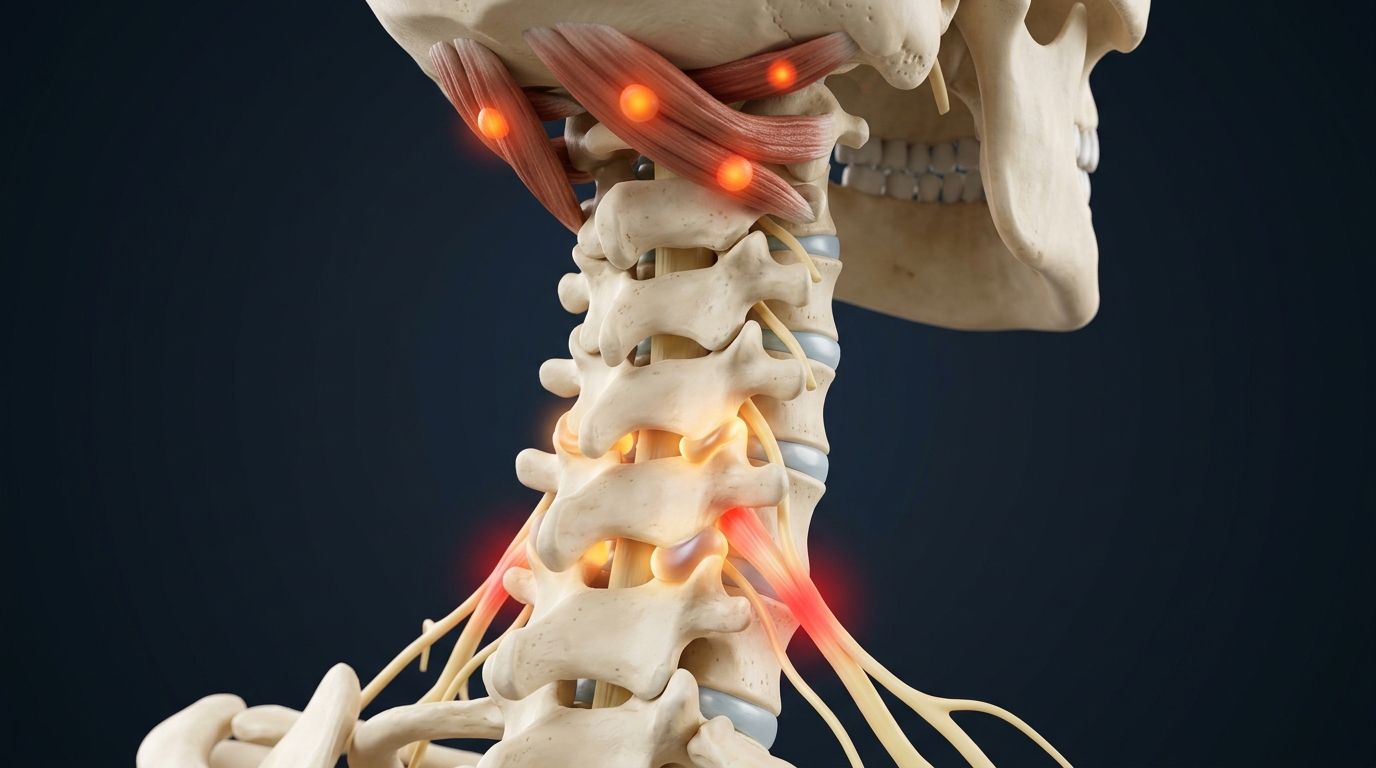
Three Clinical Self-Tests for Cervical Pathology
Perform these movements gently while seated in an upright chair.
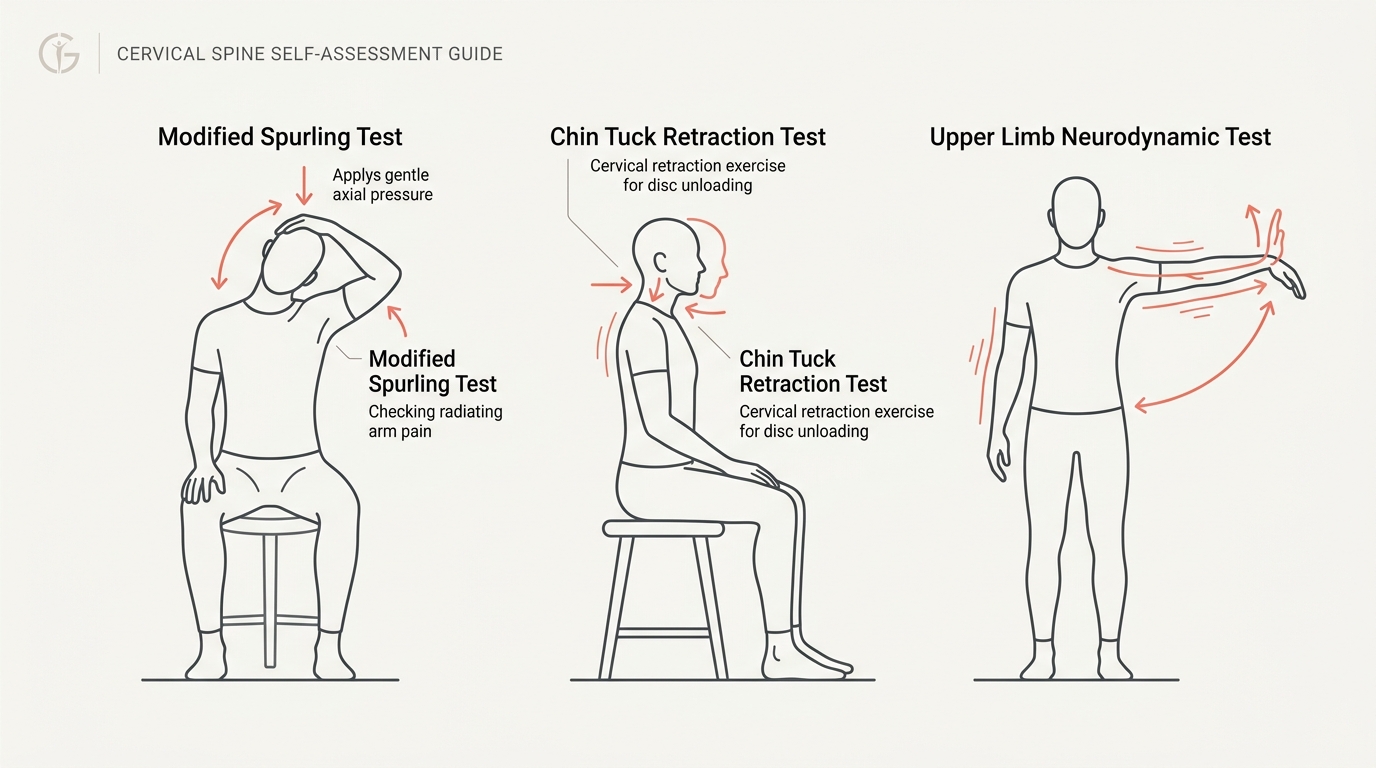
Test 1: Modified Spurling's Test (Nerve Root Compression)
Procedure: Sit upright. Slowly side-bend your head toward the painful side, rotate slightly in the same direction, and apply gentle downward pressure to the top of your head with one hand.
Positive Finding: Reproduction of sharp shooting electric shock sensations radiating down your arm into your fingers confirms cervical radiculopathy.
Test 2: Chin Tuck Retraction Test (McKenzie Disc Unloading)
Procedure: Sit upright and retract your head straight backward (creating a double chin) without tilting your head down. Repeat 5–10 times.
Positive Finding: Centralization of arm symptoms back toward the neck indicates positive directional preference for conservative therapy.
Test 3: Upper Limb Neurodynamic Test (ULTT)
Procedure: Extend your affected arm 90 degrees out to the side with palm facing upward. Bend your wrist and fingers backward toward the floor while tilting your head away from the arm.
Positive Finding: Tingling, numbness, or pulling pain down the front of the forearm confirms increased neural tension.
⚠️ Red Flags – Immediate Hospital Evaluation
Seek urgent hospital emergency care (call 112 in Sweden) if you notice progressive bilateral hand clumsiness (inability to button shirts or hold a cup), unsteady walking/gait disturbance (cervical myelopathy), or high fever with stiff neck.
Book a Cervical Spine Assessment & Rapid MRI in Sweden
Consult with an English-fluent licensed physiotherapist within 24 hours (SEK 690), or secure our comprehensive neck investigation package with guaranteed private MRI within 10 days (SEK 9,900).
Book at Vård.se →